

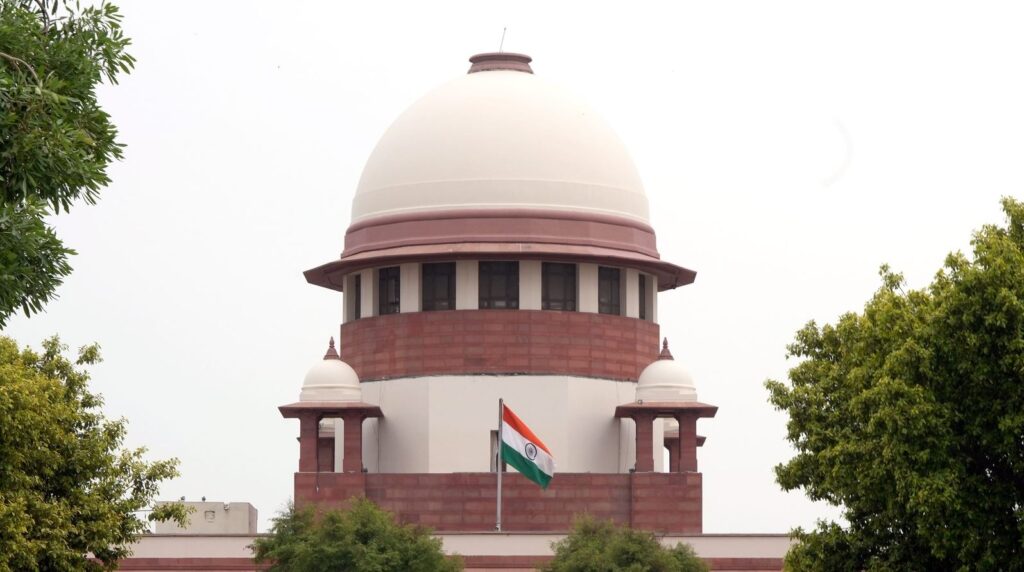
The Supreme Court of India adjourned the hearing on August 15 regarding pleas filed by the management committee of Sambhal’s Jama Masjid. These pleas challenge an order from the Allahabad High Court that impacts the survey related to the Shahi Jama Masjid-Harihar temple dispute.
Justices P S Narasimha and Alok Aradhe presided over the bench that decided to defer the case, noting a request for adjournment had been circulated among parties involved.
On August 15, the committee’s two separate pleas, challenging a May 19, 2025 order, came under scrutiny before the Supreme Court. Previous statements during the hearing underscored concerns that the Allahabad High Court had overstepped its authority by proceeding with the survey in light of the Supreme Court’s directive from December 2024.
In a pivotal ruling issued on December 12, 2024, the Supreme Court had specifically directed that all courts in India must refrain from entertaining new lawsuits and from issuing interim or final orders concerning the reclaiming of religious sites, particularly mosques and dargahs, until further orders.
This significant order emerged during the examination of various provisions of the Places of Worship Act, 1991, a law that preserves the status of all religious sites as they existed on August 15, 1947. Importantly, however, the Act does not cover the contentious Ram Janmabhoomi-Babri Masjid issue at Ayodhya.
The Allahabad High Court earlier dismissed the mosque committee’s challenge against the survey initiated by a Sambhal court, asserting that the civil court had validly directed the survey to proceed. The high court justified its decision by maintaining that the appointment of a court commissioner and associated legal actions were appropriate.
The mosque committee had contested a November 19, 2024 order from the civil judge mandating the survey of the historical mosque. They argued that a secondary survey conducted on November 24, 2024, lacked legal justification, as no court directive authorized it.
The Supreme Court agreed to review the mosque committee’s appeal against the high court’s ruling in August 2024, stating, “In the meantime, the parties are directed to maintain the status quo, as on today.” This suggests that the court aims to halt any further actions that might alter the current scenario surrounding the mosque.
This ongoing dispute has its roots in historical claims, with a lawsuit lodged before the senior division civil judge in Sambhal asserting that the mosque was constructed after the destruction of a temple at the site. According to the assertion, Mughal emperor Babur allegedly built the mosque in 1526 after demolishing the Harihar temple.
The Supreme Court’s intervention on November 29, 2024, mandated that the Sambhal court suspend its proceedings related to the mosque’s survey. The court simultaneously directed the Uttar Pradesh government to ensure peace and harmony within the town amid these sensitive disputes.