

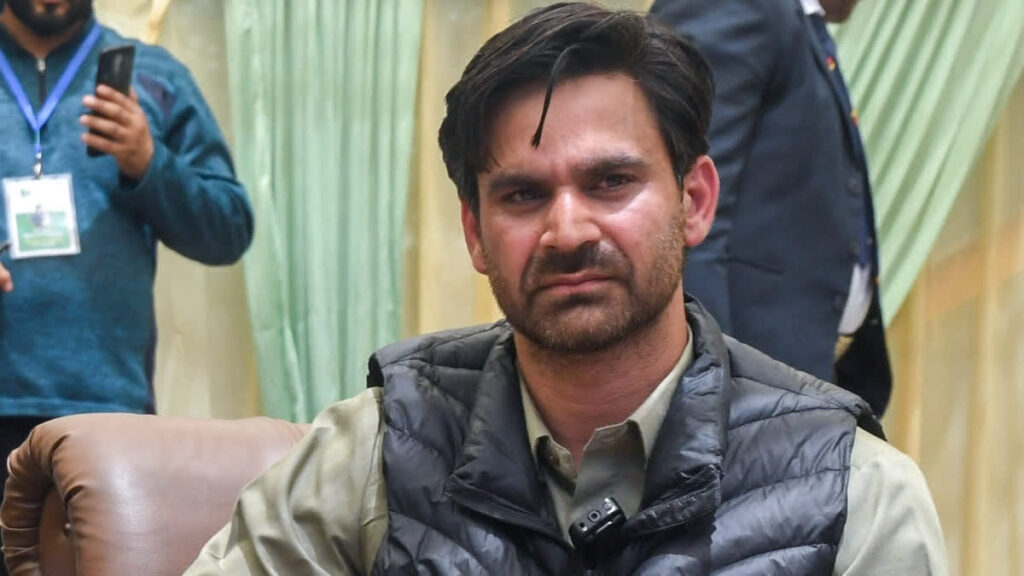
PDP leader Waheed Para condemned Union Minister Giriraj Singh’s remarks that labeled former Jammu and Kashmir Chief Minister Mehbooba Mufti a ‘terrorist’ on Wednesday, calling the statement ‘outrageous’ and ‘irresponsible’. The comments initiated a fresh wave of political discourse surrounding the issues of integrity and language in Indian politics.
Para expressed his discontent via a post on X, stating, “Giriraj Singh’s remarks calling PDP president Mehbooba Mufti a ‘terrorist’ are outrageous, irresponsible, and beneath the dignity of a Union Minister.” He emphasized that such language against a former chief minister and a prominent Muslim woman leader reveals systemic prejudice and an alarming degree of political intolerance.
This incident arose following Giriraj Singh’s controversial claims that Mufti has consistently supported terrorism. He remarked, “The BJP attempted to reform her during our alliance with the PDP. However, since there was no improvement, we let her go.”
Para, who serves as the MLA from Pulwama, articulated that Singh’s statements stem from a personal bias rather than a substantive political critique. “This is not a political statement; it reflects Giriraj Singh’s own mindset,” he remarked, underlining a growing concern among PDP supporters regarding the discourse directed at their leaders.
Adding to the controversies surrounding Mufti, she recently faced backlash after holding the national flag upside down during a protest against the abrogation of Article 370 on Tuesday. This act has further intensified discussions about her political stance and the perceptions held by rival parties.
The exchange between Para and Singh highlights the increasing tensions and polarizing opinions regarding political leaders in Jammu and Kashmir. As politicians navigate the intricacies of representation and bias, observers note that rhetoric of this nature often underscores deeper societal frictions.
Political analysts believe that such language can have significant implications for communal harmony in the region. “Remarks that incite division can impede progress and lead to further unrest,” cautioned a political scientist from the University of Kashmir. “Leaders must remember their influence over public sentiment.”
As both sides engage in a heated verbal battle, the political dynamics in Jammu and Kashmir continue to evolve, with each statement bringing forth wider implications for communal relationships and governance. The PDP’s response reflects a strategic defense of its leadership, which seeks to bolster support amidst ongoing controversies.