

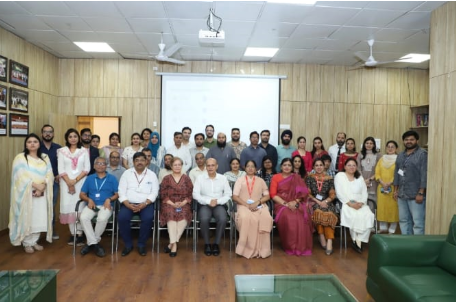
Jammu, October 8, 2026: The Government Medical College (GMC) Jammu, in collaboration with the Indian Council of Medical Research (ICMR), conducted an impactful two-day workshop on October 7 and 8, 2026. This event brought together experts from various domains to address the growing challenge of cancer in Jammu & Kashmir and Ladakh.
The workshop targeted key areas including breast, oral, cervical, and gastric cancers. It aimed to develop actionable strategies for prevention, screening, and improving survival rates, with a strong emphasis on local needs. Senior officials, researchers, and medical professionals gathered to enhance cancer care across the region, which is critical given the rising incidence of these diseases.
Practical Solutions to Cancer Challenges
Led by esteemed figures like Dr. Ashutosh Gupta, Principal of GMC Jammu, and Dr. Jyotsna Suri, Head of Pathology, the sessions emphasized practical solutions and health interventions. Notable ICMR contributors included Dr. Nisha Jose, Senior Scientist, and Dr. Bhawana Sirohi, Medical Director at BALCO Medical Centre. Their insights provided depth to discussions surrounding the effective implementation of health strategies.
One significant segment focused on the RED Cap Platform, which showcased the importance of robust data management. Dr. Pulkit Verma, a Program Officer at ICMR Headquarters, underscored the necessity of reliable data collection to evaluate healthcare effectiveness.
Improving Breast Cancer Outcomes
A pivotal goal of the workshop was to formulate a comprehensive proposal to enhance breast cancer survival rates in Jammu & Kashmir. This initiative targets the entire cancer care pathway, from raising awareness to ensuring timely access to diagnosis and treatment. Stakeholders engaged in productive discussions identifying interventions that could lead to significant improvements in patient outcomes.
Moreover, the workshop emphasized an integrated strategy for cancer prevention and screening. Experts deliberated on methods to strengthen screening services, enabling healthcare professionals to effectively identify high-risk populations and establish strong referral pathways for advanced care.
Importance of Collaborative Efforts
The workshop at GMC Jammu served as a vital forum for interaction among researchers, programme leaders, and healthcare professionals. The involvement of ICMR experts and local administration highlights the significance of cooperation across various sectors in tackling public health challenges.
By fostering these collaborative efforts, the workshop aims to produce scientifically sound proposals and implementation plans that will ultimately enhance cancer care in Jammu & Kashmir and Ladakh. This approach will empower stakeholders to develop community-specific health solutions.
Future Directions in Cancer Control
The outcomes from the workshop will play a crucial role in addressing pivotal aspects of cancer care, such as:
- Strengthening community awareness and prevention initiatives.
- Enhancing population-based screening processes.
- Promoting efficient diagnostic pathways and timely treatment.
- Improving referral systems to ensure a seamless care experience.
- Enhancing breast cancer treatment methodologies and survivorship.
- Developing intervention packages tailored to local needs.
- Building robust data management practices using digital tools.
- Creating actionable evidence that guides future cancer control strategies.
- Facilitating coordination among medical institutions, government bodies, and healthcare systems.
A Positive Change for Cancer Patients
This workshop signifies a critical step towards creating a coordinated and evidence-based strategy for cancer control in Jammu & Kashmir and Ladakh. By connecting research, clinical practice, and patient care, it aspires to bridge the existing gaps between research findings and real-world application. The overarching aim remains to facilitate early detection of cancer, guarantee timely access to effective treatments, and ultimately enhance the quality of life for the patients in these regions.